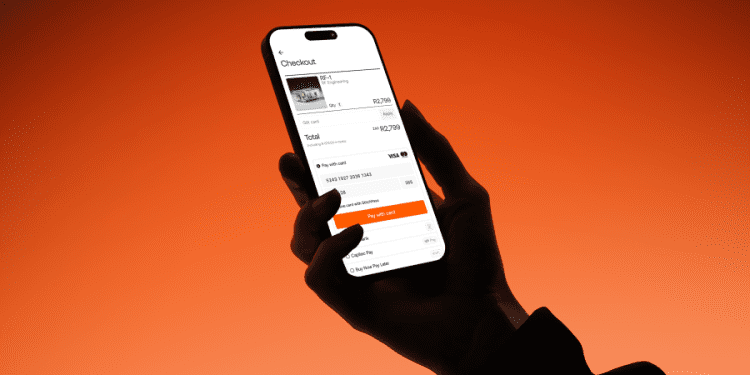
South African fintech Happy Pay has raised a $5 million seed round to expand its buy now, pay later alternative, which strips out interest and consumer fees by shifting the economics of instalment payments to merchants.
South African fintech Happy Pay has raised a $5 million seed round to expand its buy now, pay later alternative, which strips out interest and consumer fees by shifting the economics of instalment payments to merchants.
The round was led by Partech, with participation from Futuregrowth Asset Management, The University Technology Fund, Summit.Deals, and existing backers including 4Di Capital, E4EAfrica, Equitable Ventures, Launch Africa Ventures, Enso Equity, and Felix Strategic Investments.
The company is taking a different route from the standard BNPL playbook. Instead of charging shoppers interest or late fees, Happy Pay positions its product as an ad-subsidised payments network.
Merchants pay to reach high-intent shoppers and improve conversion rate, while consumers get a more flexible way to pay without taking on expensive debt. In effect, the checkout flow doubles as a marketing channel, with the financing cost absorbed by the retailer.
That pitch lands in a market where household debt is already under pressure. In South Africa, credit-active consumers are reported to devote a large share of their income to repayments, making a zero-interest product easier to sell than in markets with lower debts. Happy Pay is betting that affordability, rather than the spread of short-term lending, will be the real driver of scale.
The company plans to use the new funding to grow across digital and physical checkout channels, broaden its merchant network, and strengthen its AI and risk systems.
Those back-end tools matter because BNPL businesses often depend on underwriting discipline, fraud control, and repeat merchant usage. A consumer-friendly offer only works if the platform can keep defaults low while demonstrating that merchants achieve higher conversion rates and larger basket sizes.
Partech’s support is a meaningful signal given that the BNPL category has been under greater scrutiny worldwide. Investors have become more selective in evaluating unit economics, delinquency rates, and regulatory pressures.
Partech’s view is that Happy Pay’s model is closer to a commerce tool than a pure credit product, which could make it more durable if merchants treat it as a sales channel rather than a subsidy.
Happy Pay is seeking to reposition BNPL from consumer debt to merchant acquisition.
That appears to be a smarter framing in a market where affordability is a constraint and trust in credit products can be fragile.
The hard part will be proving that merchants are willing to keep paying for that conversion uplift at scale, especially if economic conditions tighten.
If the model works, it could give South African fintech a more practical version of BNPL, one built around distribution, checkout efficiency, and lower-risk consumer access.
Don’t miss important articles during the week. Subscribe to techbuild weekly digest for updates