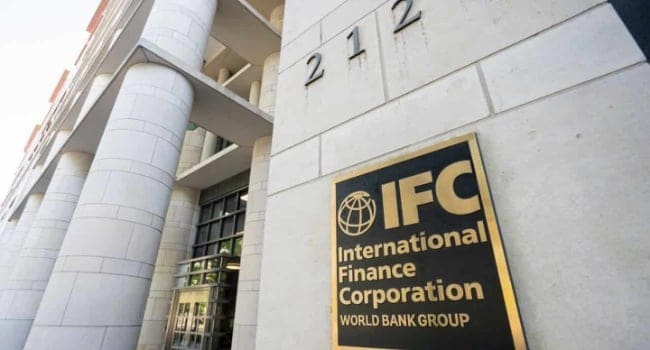
IFC has proposed a commitment of up to $20 million to Lightrock Africa Fund II, paired with a separate $5 million co-investment sleeve under delegated authority, positioning it as a potential anchor limited partner capped at 20 percent of the vehicle’s capital.
IFC has proposed a commitment of up to $20 million to Lightrock Africa Fund II, paired with a separate $5 million co-investment sleeve under delegated authority, positioning it as a potential anchor limited partner capped at 20 percent of the vehicle’s capital.
The fund targets $150-$200 million and will be structured as a Mauritius-registered limited partnership to attract international institutional capital under a familiar legal framework. Mauritius
The vehicle is explicitly focused on on-continent growth equity, concentrating primary deal flow in Nigeria, Kenya and South Africa while retaining flexibility to pursue opportunistic opportunities elsewhere.
The fund is designed to fill the so-called growth equity gap, targeting $10 million to $20 million tickets that are too large for typical venture funds yet too small for large-cap buyout players.
Lightrock’s regional track record underpins the strategy. The firm was an early backer of Moniepoint as the business scaled into a market-leading payments infrastructure provider.
It also led a growth round in South Africa’s Lula, committed equity to off-grid leader Sun King, and participated in later rounds for Nairobi-based fintech 4G Capital. Those exposures reflect a consistent sector focus across fintech, climate and inclusion-oriented businesses at Series B and C stages.
Putting a development finance institution into a hard-capped anchor slot with a co-investment sleeve is a catalytic design. It reduces perceived first-loss risk for other limited partners and signals that the fund’s managers must deliver institutional-grade governance and exit discipline.
The choice of Mauritius as a domicile follows common practice for Africa-focused funds because of treaty protections and clarity on repatriation. Still, it also creates pressure to demonstrate convertibility and predictable exit paths that appeal to global pension and insurance investors.
From where I sit covering the market, this proposal points to a maturing mid-market for African private capital.
Growth equity remains the undercapitalised segment of the continent’s financing stack, and an IFC-backed vehicle could help normalise $10 million-plus rounds for companies that have demonstrated product-market fit but need scale capital.
The real test will be execution: sourcing repeatable dealflow at the stated ticket sizes, managing currency and regulatory complexity across multiple jurisdictions, and producing measurable exits that persuade more commercial LPs to allocate at scale.
Don’t miss important articles during the week. Subscribe to techbuild weekly digest for updates