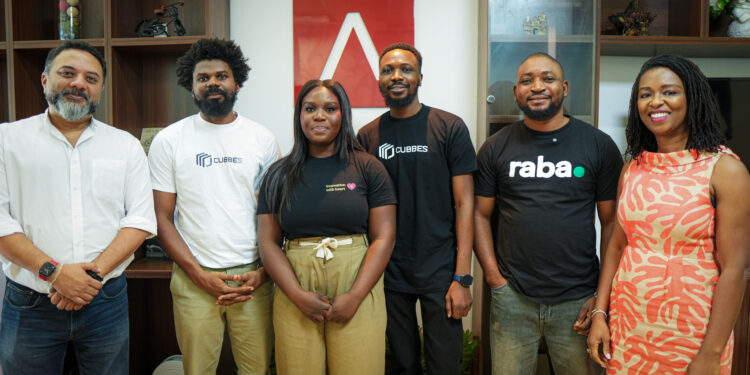
After pivoting from B2C to B2B2C during Antler Lagos, Raba has processed N350 million in equipment financing and serves over 300 businesses with a model that connects dealers, lenders, and SMEs.
After pivoting from B2C to B2B2C during Antler Lagos, Raba has processed N350 million in equipment financing and serves over 300 businesses with a model that connects dealers, lenders, and SMEs.
Opeyemi Bolarinwa grew up watching his father struggle with a simple problem. His dad ran a hatchery, but he lacked a critical piece of equipment that forced him to frequently borrow from competitors.
Every time production ramped up, his father had to send Opeyemi to another person’s hatchery because they didn’t own the machine themselves.
For two years, his father saved. He scraped together funds slowly until he finally bought the machine, then everything changed.
Production jumped almost twentyfold compared to what they managed before. That single piece of equipment transformed the business.
“That is the power of what equipment can do,” Opeyemi recalls.
That childhood memory stayed with him through nine years working in lending and risk management across Nigeria’s fintech and banking sectors. He saw the same pattern repeat endlessly.
Small and medium-sized businesses knew exactly what equipment they needed to grow; they understood how that equipment would increase revenue, but they couldn’t access the upfront capital required to buy it.
Banks demanded extensive documentation, multiple approval levels, and weeks of waiting. Even after jumping through all those hoops, many businesses still got rejected.
Opeyemi reviewed countless credit analyses during his time at First Bank. He knew firsthand how rigid the system was.
“When you go to commercial banks, they tell you to bring your certificates, bring this, bring that. There’s a lot,” Opeyemi explains. “From start to finish, when you present this transaction, it could take two weeks because it has different approval levels. And in the long run, you might not even get those funds.”
That challenge eventually led Opeyemi to partner with Bola Kazeem, who had led technical product teams at successful startups like Max, Babangona, and Reliance HMO.
Together, they founded Raba, a lease-to-own equipment financing platform that makes commercial equipment accessible to African SMEs through flexible payment plans.
But getting Raba’s model right required a pivot and some hard lessons learned during the Antler Lagos residency program.
Walk through any commercial district in Lagos, Ibadan, or Abuja, and you’ll find restaurants that need new ovens, retailers who need better freezers, manufacturers who need industrial machines, and service providers who need generators.
These businesses understand their equipment needs precisely. They can calculate exactly how much additional revenue the equipment would generate.
What they don’t have is a six-figure amount sitting in the bank to pay upfront.
SME equipment acquisition financing is one of the most persistent barriers to business growth across Africa. Businesses need equipment to grow revenue, but they need revenue to afford equipment.
The gap between those two realities traps countless enterprises in a state of permanent underperformance.
The problem extends beyond simple capital constraints. Even businesses with some savings face difficult tradeoffs.
Spending working capital on equipment means sacrificing other essential expenses, such as inventory, marketing, or operational costs.
A restaurant owner might have enough cash to buy a new oven, but doing so could leave them unable to purchase ingredients for the next month.
Western markets have solved this problem for decades through equipment financing and lease-to-own models.
Walk into a supplier in the US or Europe, pick the equipment you need, and arrange flexible payments on the spot.
The model works because it aligns incentives: equipment dealers sell more units, lenders earn interest on secured assets, and businesses acquire tools that pay for themselves through increased productivity.
Africa has lacked the infrastructure to make this model work at scale. Financial institutions view SME equipment financing as too risky and too operationally complex.
Equipment dealers lack relationships with lenders and the technical capability to embed financing into their sales process. SMEs face a fragmented ecosystem where finding financing, vetting equipment, and managing payments requires navigating multiple disconnected systems.
Raba set out to build the missing infrastructure layer that could connect all three stakeholders and make lease-to-own equipment financing in Africa a reality.
Opeyemi Bolarinwa describes himself as “a credit guy.” He has spent his entire career in lending, credit analysis, and risk management. His resume reads like a tour through Nigeria’s financial services ecosystem: Renmoney, Page Financials, Rosabon Financials, P2vest Technologies, and First Bank.
That deep experience in secured and unsecured lending operations gave him an insider’s view of why equipment financing failed to reach SMEs.
He understood the risk frameworks banks used, the approval processes that created delays, and the conservative underwriting criteria that excluded most small businesses.
He also gained experience in fintech operations, particularly during his time at P2vest Technologies, a B2B platform where he led business development. That experience would prove valuable later.
His co-founder, Bola Kazeem, brought complementary skills. At some of Nigeria’s successful startups, Bola led technical product teams, building systems and scaling products.
Where Opeyemi had deep expertise in credit and risk, Bola understood how to turn technology into scalable solutions and growth.
The two founders saw an opportunity to build something different. Rather than another consumer lending app, they wanted to focus on productive assets that directly drove business growth. Equipment financing checked that box.
Their initial approach seemed logical: build a B2C platform that financed equipment directly to end customers. Cut out the middlemen, streamline the process, and deliver equipment to businesses that need it.
Between January and June, they tested this model. They acquired customers, financed equipment purchases, and started building operations. The results were modest but showed some promise.
Then they joined Antler Lagos.
Antler’s eight-week residency program put Raba through intensive analysis of their business model, market positioning, and growth strategy. The mentorship sessions forced the founders to question their assumptions.
One insight emerged: dealers held the key to scale.
Equipment dealers already had relationships with SME customers. They understood local markets, maintained inventory, provided after-sales service, and handled logistics.
Most importantly, they faced a problem Raba could solve. Dealers wanted to sell more equipment, but upfront payment requirements limited their addressable market. Many potential customers simply couldn’t afford to pay in full.
If Raba could provide embedded finance for equipment dealers, enabling them to offer lease-to-own terms at the point of sale, both parties would benefit.
Dealers would expand their customer base and increase sales volume. Raba would access pre-qualified leads through trusted relationships rather than acquiring customers one by one through expensive marketing.
The shift from B2C to B2B2C was a fundamental change in Raba’s strategy. Instead of competing with dealers for customers, Raba would empower dealers to close more sales by offering financing as a service.
“Before Antler, we used to be B2C,” Opeyemi explains. “And between June and today, we’ve done about 12x whatever we did from January to June. So that’s to tell you how the program actually shaped us into getting to have a better vision.”
The results validated the pivot as Raba’s transaction volume jumped twelvefold in roughly the same time period they had previously operated.
Dealers proved eager to integrate financing into their offerings, and their existing customer relationships reduced acquisition costs.
Raba operates as a fintech liquidity platform for equipment by orchestrating three distinct stakeholder groups:
Financial Partners provide the capital that funds equipment purchases.
These institutions include banks, fintech lenders, and other sources of debt financing. Raba handles the entire customer onboarding process, conducting detailed KYC checks, business assessments, and credit underwriting.
Once a customer meets approval criteria, Raba refers them to financial partners as pre-qualified borrowers.
This arrangement solves a major pain point for lenders.
Rather than building expensive SME acquisition and underwriting capabilities from scratch, they receive thoroughly vetted customers ready for financing. Raba’s risk assessment reduces default probability and simplifies the credit decision process.
The platform has already secured two financial partners and processed N350 million in equipment financing through these relationships.
Dealers include commercial equipment suppliers and distributors who sell generators, ovens, freezers, industrial machines, and other business equipment.
Raba provides these dealers with tools to offer lease-to-own or installment purchase options instead of demanding full upfront payment.
The value proposition for dealers includes expanding sales volume by making equipment affordable to more customers.
For instance, a baker who can’t afford a N2 million oven upfront might easily manage N200,000 per month over twelve months. That converts a lost sale into a completed transaction.
Dealers also benefit from improved cash flow predictability. Because Raba connects them with verified, financed customers backed by institutional capital, they reduce the risk of payment defaults while maintaining steady sales velocity.
Raba has onboarded over 60 dealers across multiple cities and processes transactions through a web application built specifically for dealer workflows.
Customers consist of small and medium-sized businesses that need commercial equipment for operations or expansion. These include restaurants, retailers, manufacturers, food processors, and service providers across Nigeria’s commercial centers.
Through Raba’s lease-to-own platform benefits, these businesses access equipment immediately while preserving working capital.
Instead of paying the full cost upfront, they make a 30% equity contribution and then pay the remainder in affordable periodic installments at a 4.5% interest rate.
The average transaction size sits around $2,500, showing that mid-range equipment purchases are most critical for SME growth.
The operational flow Raba has built removes most of the friction that previously made equipment financing impractical.
A customer identifies the equipment they need through a dealer in Raba’s network. Rather than walking away because they lack upfront capital, they apply for financing through the dealer’s interface. The dealer applies to Raba’s platform.
Raba’s team conducts credit underwriting using risk assessment criteria refined through Opeyemi’s years in lending.
The process evaluates business viability, payment capacity, and equipment utility rather than requiring the extensive documentation banks demand. Other factors may also include time in business, demonstrated revenue, and industry risk profiles.
“Our risk acceptance criteria factor around what we already know about risk today,” Opeyemi explains. “And we have very high risk criteria that allow us to underwrite those transactions.”
Once approved, the customer makes a 30% equity contribution. This down payment ensures the customer has skin in the game and reduces the financed amount. Raba then coordinates with financial partners to fund the remaining 70%.
From the moment the customer submits complete documentation and makes their equity contribution, Raba delivers the equipment within 48 hours. Compare that to the two-week timeline at commercial banks, which often ends in rejection anyway.
The customer receives the equipment immediately and begins using it to generate revenue. They make monthly payments at a 4.5% interest rate until they own the equipment outright. Raba has built a recovery infrastructure that minimises default risk, keeping losses close to zero.
Raba generates revenue from multiple sources within the ecosystem, a characteristic of the best marketplace platforms.
The company charges a 5% processing fee on all transactions, paid by customers as a service fee for accessing financing they couldn’t otherwise obtain. Given the productivity gains equipment provides, this fee represents a small fraction of the value created.
Raba also applies a markup on the interest rates charged to customers. Financial partners provide capital at wholesale rates, and Raba adds a margin when extending those funds to end customers.
This spread compensates Raba for underwriting risk, operational overhead, and platform development.
Further revenue comes from insurance fees. Equipment financing requires coverage protecting all parties against damage or loss, and Raba earns commissions on insurance policies embedded in each transaction.
The multi-sided revenue model insulates Raba from dependence on any single income stream. Even if margins compress on one side, the platform generates value from multiple stakeholder relationships.
Since pivoting to B2B2C, Raba has served 300 businesses across Lagos, Ibadan, and Abuja. The company has processed N350 million in equipment financing transactions through its dealer network and financial partners.
Transactions have materialized in new markets, including Osogbo and, more recently Abuja, with a significant N220 million transaction pipeline developing in Aba, one of Nigeria’s most commercialized cities.
Raba targets 10,000 businesses by the end of Q1, an ambitious but achievable goal given current momentum.
The company plans to expand coverage to 15 states across Nigeria by Q1, up from the current three primary markets.
Geographic expansion extends beyond Nigeria. As a platform focused on financing options for manufacturing SMEs in Africa, Raba sees opportunities across the continent.
The same equipment financing gap that constrains Nigerian businesses affects SMEs in Kenya, Ghana, Côte d’Ivoire, and throughout Sub-Saharan Africa.
“We are trying to industrialize the continent, not just Nigeria,” Opeyemi states plainly.
The company is also exploring partnerships with SME clusters and cooperatives. These organizations aggregate small businesses within specific sectors, creating natural channels for equipment financing.
Cluster members typically have longer business histories and stronger community accountability, both of which reduce credit risk.
Equipment financing isn’t entirely new in African markets. Some banks offer asset-backed lending, and other fintechs have experimented with SME financing products.
What makes Raba’s approach distinct is the focus on embedded finance for equipment dealers rather than direct-to-consumer acquisition.
“If you look at the likes of people who do something similar, they are focused on everybody,” Opeyemi notes. “We are focused on businesses, SMEs.”
Consumer financing and SME equipment financing require entirely different underwriting approaches, risk models, and operational capabilities. By specializing in productive assets for businesses, Raba can refine its offering for that specific use case.
The dealer-centric model also creates natural advantages. Dealers provide local market knowledge, existing customer relationships, equipment expertise, and after-sales service.
Raba doesn’t need to become an equipment expert across dozens of categories. The dealers handle that complexity while Raba focuses on financing infrastructure.
The speed of delivery represents another differentiator, as a 48-hour turnaround from approval to equipment delivery beats bank timelines by an order of magnitude. For businesses, faster access to equipment means faster revenue generation.
Perhaps most importantly, Raba has built its risk infrastructure specifically for SME equipment financing. The recovery systems minimize default risk to near zero, according to Opeyemi.
That strong risk performance enables Raba to negotiate favorable rates with financial partners, creating a competitive advantage that compounds over time.
Beyond the strategic pivot from B2C to B2B2C, Antler Lagos provided Raba with validation frameworks that strengthened the business model.
The program supported founders in testing assumptions, validating market demand, and building systems that could scale.
“It was through those missions, during that training from Antler, that we were able to add focus to B2B,” Opeyemi reflects.
The residency also connected Raba to a network of investors, advisors, and fellow founders. Those relationships open doors and provide access to expertise that would take time to build independently.
Most importantly, Antler’s investment gave Raba the runway to execute on its refined strategy. With capital, clarity on their business model, and momentum from early traction, the company can now focus on scaling operations across Nigeria and eventually throughout Africa.
The story Opeyemi tells about his father’s hatchery encapsulates Raba’s vision. One piece of equipment created a twentyfold increase in production capacity.
That’s not unusual; equipment upgrades routinely generate returns that dwarf their cost, assuming businesses can access the equipment in the first place.
A baker who upgrades from a small residential oven to a commercial unit can serve wholesale clients instead of just retail.
A manufacturer who adds a second production line can fulfill larger orders and reduce per-unit costs. A restaurant that installs proper refrigeration can expand its menu and reduce spoilage.
These upgrades drive productivity growth at the micro level, which aggregates into economic development at the macro level.
Industrial capacity doesn’t materialize from nowhere, it builds incrementally as businesses acquire better equipment, hire more workers, and serve larger markets.
But none of that happens if businesses can’t access equipment financing. Without flexible payment options, businesses stay trapped at their current capacity level.
They might save for years to buy equipment, like Opeyemi’s father did, not leaving out the fact that they most likely would have lost countless transactions to better-equipped competitors in that period of saving.
Raba’s platform solves that bottleneck by connecting dealers, lenders, and SMEs through a unified infrastructure. The company makes equipment ownership accessible and affordable. The result is faster business growth, higher employment, and increased industrial capacity across Africa.
Millions of SMEs across Africa need equipment upgrades but can’t access traditional financing. Each represents a potential transaction for Raba’s platform.
The path from 300 businesses served to 10,000 by Q1 requires execution, but the model has proven itself. Dealers want to offer financing to close more sales.
Financial partners want pre-qualified SME borrowers. And businesses desperately need access to equipment that can transform their operations.
Raba sits at the intersection of those three needs, providing the infrastructure that makes the entire ecosystem function.
That’s the essence of platform power: create value for multiple stakeholders simultaneously, and capture a portion of that value through fees and margins.
For Opeyemi, it’s also personal when he watched equipment transform his father’s hatchery business. Now he’s building the platform that can deliver similar transformations to tens of thousands of businesses across Africa.
The vision is to make equipment accessible so businesses can grow, industrialize the continent one lease-to-own transaction at a time, and prove that Africa’s SMEs can compete globally when they have access to the right tools.
That vision started with a childhood memory of borrowing capacity from competitors. It matured through the years in credit and risk management and it crystallized during eight intensive weeks at Antler Lagos when the founders realized dealers held the key to scale.
Now Raba is executing on that insight, processing millions in equipment financing and preparing to expand across Africa.
The platform has found product-market fit, proven its unit economics, and built the infrastructure to scale. What comes next is expansion, one dealer, one financial partner, and one SME at a time.
Don’t miss important articles during the week. Subscribe to techbuild weekly digest for update