Women in Africa, like many other parts of the world, have long been underrepresented in the technology industry. However, there has been a growing movement in recent years to increase the participation of young women in Africa’s technology Landscape.
Women in Africa, like many other parts of the world, have long been underrepresented in the technology industry. However, there has been a growing movement in recent years to increase the participation of young women in Africa’s technology Landscape.
Creating a spotlight on women in tech in Africa and supporting their journey is part of Techbuild Africa’s contribution to promoting women in tech in Africa.
Ajiri Omafokpe, a Senior Product Designer with a specialty in creating Web3 and fintech products shares her journey into tech and what it takes to be a product designer with us in an interview.
My name is Ajiri Omafokpe. I work as a Senior Product Designer at Kora Pay. Basically I’ve been doing design in general for about seven years, but product design specifically for a little over four years. I enjoy my work, that’s why I always like to talk about it.
I help tech companies meet their business goals, basically. And how I do this by designing user experiences that help them meet these goals.
For example, when you think of companies like Kora Pay, where we help businesses receive and send out payments to and from their customers.
My job is to help design the platform that helps make this possible. Essentially, I design interfaces that help the business meet its goals, which in turn, helps them make money.
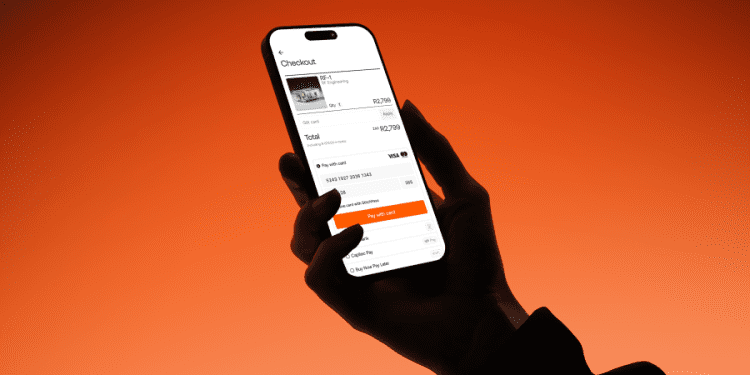
At my former workplace, YellowCard. I carried out some testing and did some design improvements that helped the company make over 60% more money than they were making in Nigeria, right because we had a design flaw on one of the checkout features that I was able to fix with the help of the other people on my team.
I was already in the tech space for a long time, while I was still very young, and I stepped my foot into the first cyber cafe when I was about 10 or 11 So since then, I have been drawn into the tech space. But it was in 2015, that I met Jason who made me decide I was going to stay. Jason was a mentor that was also a graphics designer.
I looked at his life and decided that was what I wanted, if that can give you this amount of money, fulfillment, interest, and make people do things right, I want to also have that feeling. And so that’s how I got into tech as a career.
Oh, I would say the best part for me is talking to customers, whenever I have the opportunity to have conversations with people that use whatever product I’m working on at the time, I get to learn a lot.
I get to see flaws and good things also, and that helps put me in check because being a creator of products, you might fall into the trap of becoming egotistical, and getting too attached to your product.
When I talk to people that actually use the product, it helps set a lot of things straight for me and it also helps me see how much impact my work is creating, and that’s pretty awesome. That makes me feel good.
I do have a mentor in the product design space, his name is Leke, and he has been very pivotal to my career growth and everything around that. Whenever I hit any roadblocks, I can always go to him and from time to time, he always just comes through and helps out.
I talk about mentorship a lot because mentorship has helped me in many different ways. So it was first a mentor that made me even realize that a career in tech was possible. You can check out my profile @adplist to book a time slot for free.
I have a philosophy that I use in my life in general, I also use it when it comes to tech, and the philosophy is, whatever you can do today, don’t do it tomorrow.
Whenever I see any new tech or any new thing I would like to experiment with, I do it that day or study the article that day or add to my learning plan as quickly as I can, because failing to implement it will make it slip by and that’s not the best.
To stay updated means studying, following relevant people in the space, and always keeping your eye out and asking questions, talking to other designers.
All these will make you stay updated and that’s what I currently do. I also learn as I go when I need to create maybe a specific type of gradients to implement in my design. But I also have a system where I do courses every morning just to make sure that I’m staying updated. I’m improving myself from different angles.
The one I talked about, YellowCard. I got to interact with people actually using the product. We carried out usability testing and then able to basically find out what their pain points were, and then solve those problems.
Every time I think about it, though I’m not with YellowCard I know that people still use it and they derive satisfaction as well as meeting their goals using something that I created and improved.
Well, I’ll say first, you need to learn communication. It is a very important skill in product design because you’re communicating through design, and through the copy that you use in the designs, you’re communicating with your team members, and with people outside your design team like engineering, and product management.
You are also communicating with other stakeholders in the company and the customers too. So you need to be able to communicate, learn to give and receive feedback, you also have to learn to listen, listening is part of communication.
But overall communication is a very big skill you need to have as a product designer. The second thing you need to learn is your hard skills, you need to learn UI and UX design, there are multiple courses you can indulge in, to learn. But I always recommend that you go for certificate-based courses. Think about Udacity nano degree, Google UX course, and many others that are just there.
Fun fact is people always think I have money which is neither true nor a lie and that’s something interesting for me.
Don’t miss important articles during the week. Subscribe to techbuild weekly digest for updates.